How Player Data Shapes Reel Timing Adjustments in European-Licensed Slot Platforms
Written by Yara Simon · Aug 26, 2026

How Player Data Shapes Reel Timing Adjustments in European-Licensed Slot Platforms
European-licensed slot platforms collect extensive player data including session duration, bet frequency, and win patterns, then feed those metrics into algorithms that modify reel spin durations and stop sequences while maintaining certified random number generator outputs. Regulators in multiple jurisdictions require these adjustments to stay within predefined fairness parameters, and operators document every change to demonstrate compliance during audits. Data streams from thousands of concurrent sessions allow systems to identify clusters of rapid small bets or extended low-activity periods, prompting minor timing tweaks that extend or shorten individual reel cycles by fractions of a second.
Core Mechanics of Reel Timing Adjustments
Reel timing refers to the precise interval between spin initiation and symbol settlement on each reel, and licensed platforms adjust this interval based on aggregated historical data rather than individual real-time inputs. When datasets reveal consistent player drop-off after short sessions, algorithms may lengthen the final reel deceleration phase to sustain engagement without altering payout probabilities. European operators segment data by device type and time of day because mobile users often show different interaction rhythms than desktop players, and timing parameters adapt accordingly across those segments.
Regulatory Oversight and Data Governance
Authorities across the European Economic Area mandate that any timing adjustment preserve the certified return-to-player percentage and that all modifications undergo independent testing before deployment. The European Gaming and Betting Association publishes guidelines that emphasize transparent logging of data-driven changes so that auditors can trace every parameter shift back to its originating dataset. Platforms must also segregate personal data from gameplay analytics under the General Data Protection Regulation, ensuring that reel timing systems receive only anonymized aggregates.
Research from academic groups studying digital gaming behavior indicates that timing variations remain imperceptible to players when kept within a narrow range of 200 to 800 milliseconds, yet these small shifts correlate with measurable differences in session length across large populations. Operators therefore calibrate adjustments to fall inside that window while logging the exact data thresholds that triggered each change.
Implementation Through Analytics Platforms
Modern European-licensed operators integrate real-time data pipelines that process millions of events per hour, applying machine learning models trained on historical session records to predict optimal reel timing for specific player cohorts. When models detect an uptick in high-volatility game selections during evening hours, the system may subtly extend the middle reel stop delay for those titles, and the adjustment is recorded with a timestamp, player cohort identifier, and regulatory reference number. This approach allows platforms to respond to emerging patterns without manual intervention while maintaining an auditable trail.
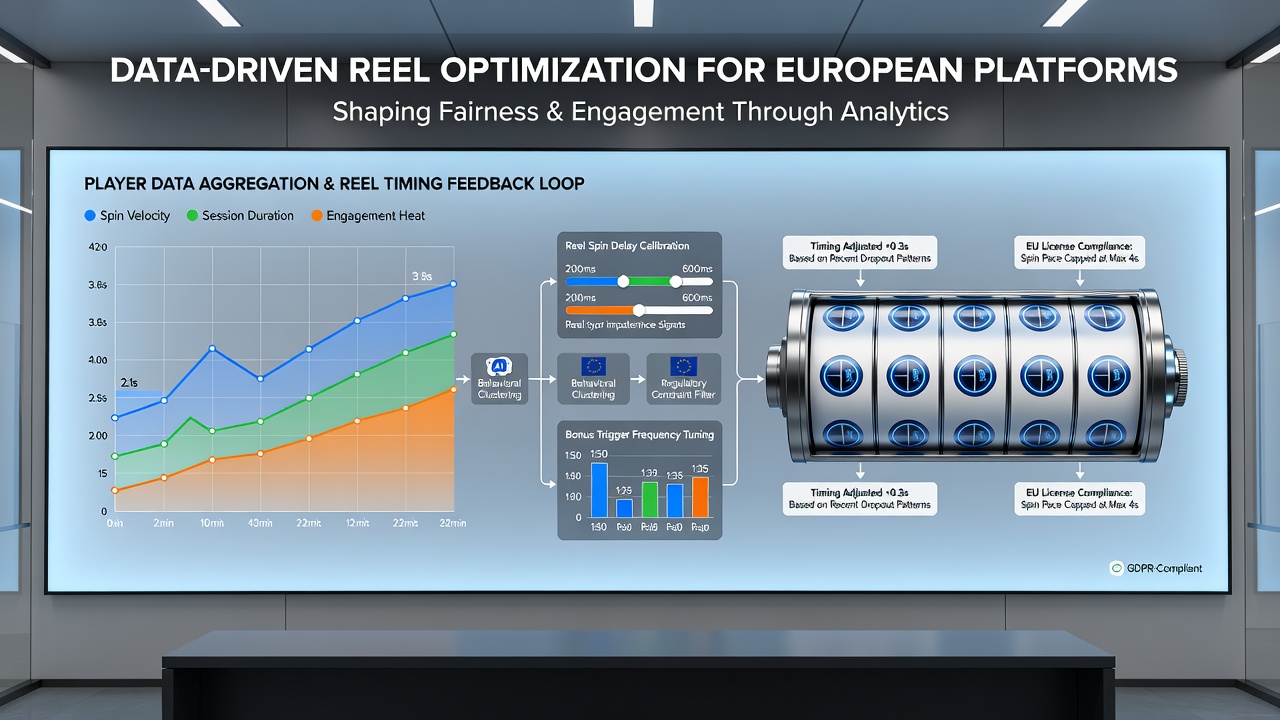
One documented case involved a platform that observed declining average session times on a popular five-reel title during weekday afternoons, and the analytics system responded by increasing the final reel settle time by 350 milliseconds for players whose prior five sessions lasted under four minutes. The change produced longer average sessions without any alteration to the underlying probability tables, and subsequent audit reports confirmed the adjustment stayed within licensed parameters.
Technical Architecture Supporting Dynamic Adjustments
Backend systems separate the certified random number generator from the timing layer, allowing reel animation speeds to vary while the outcome sequence remains fixed once the spin request is processed. European licensing frameworks require this separation so that timing modifications cannot influence the certified random sequence. Data warehouses store both raw event logs and derived timing parameters, enabling operators to reconstruct any past adjustment and demonstrate that fairness metrics remained constant.
By August 2026 multiple platforms had deployed updated application programming interfaces that expose timing metadata to compliance dashboards, giving regulators direct visibility into how player data cohorts trigger specific reel behavior changes. These interfaces also support cross-border data portability requirements when players relocate between European jurisdictions with different technical standards.
Conclusion
Player data continues to drive incremental refinements in reel timing on European-licensed slot platforms, always within the boundaries set by independent certification and data-protection rules. The combination of anonymized analytics, auditable logging, and regulatory oversight ensures that adjustments remain technical optimizations rather than outcome alterations. As datasets grow and modeling techniques advance, the precision of these timing calibrations is expected to increase while documentation standards keep pace with evolving European requirements.